The Science Behind an Effective Face Wash: Glycolic Acid and Niacinamide
Cleansing is a critical step in maintaining skin health, yet dermatological science has shown that an effective face wash can deliver benefits beyond impurity removal. When formulated with active ingredients such as glycolic acid and niacinamide, a cleanser can support controlled exfoliation, barrier integrity, and inflammation regulation—without compromising skin physiology.
12/10/20252 min read
Glycolic Acid: Controlled Exfoliation and Epidermal Renewal
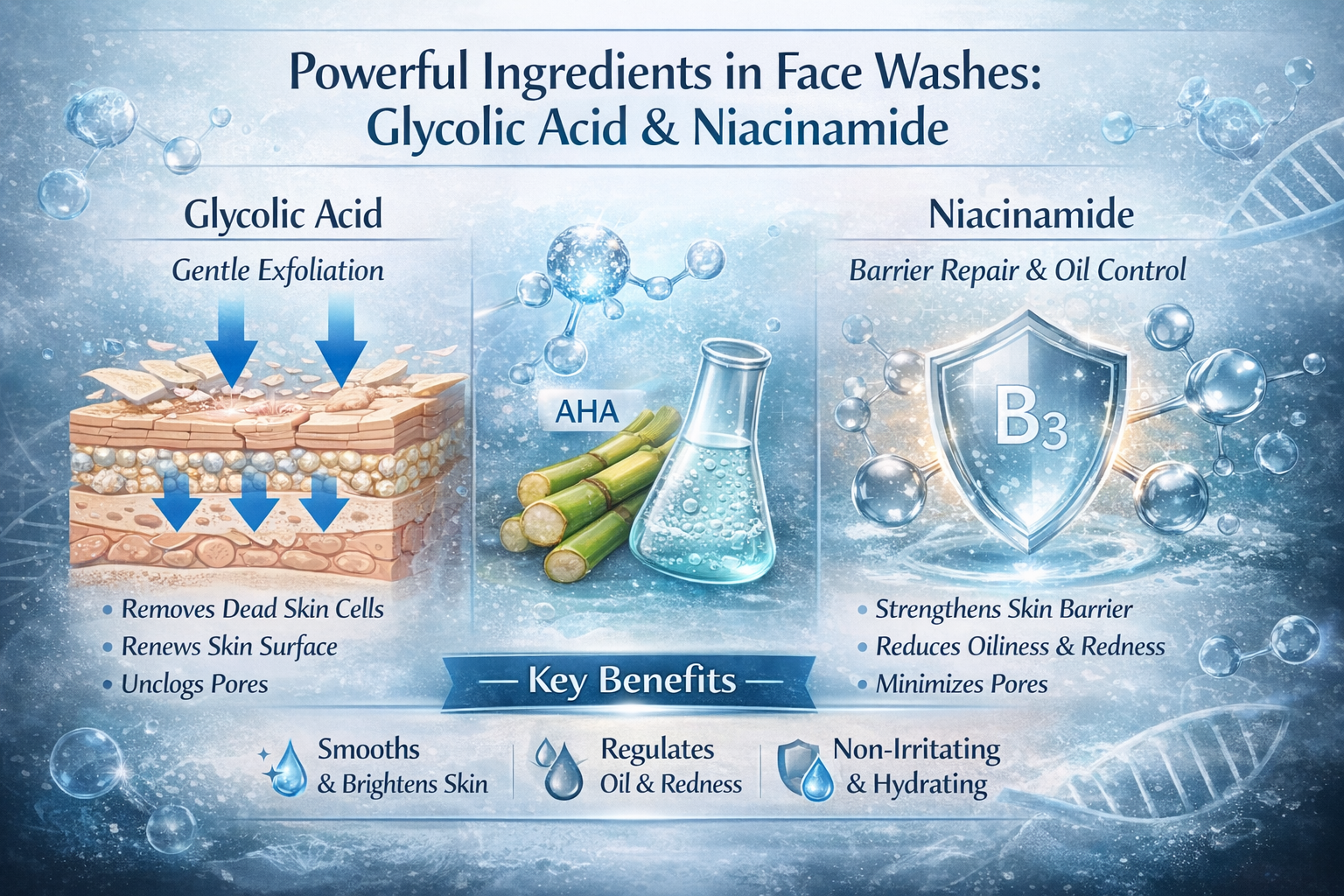
Glycolic acid is an alpha-hydroxy acid (AHA) with the smallest molecular size among AHAs, enabling efficient penetration into the stratum corneum. Its primary mechanism involves reducing corneocyte cohesion by disrupting calcium-dependent ionic bonds, leading to enhanced desquamation and epidermal turnover.
Clinical studies demonstrate that glycolic acid improves skin texture, smoothness, and radiance while reducing follicular plugging and comedone formation. It has also been shown to stimulate epidermal renewal and improve signs of photoaging through increased collagen synthesis with continued use. Importantly, when used at low concentrations in rinse-off products such as face washes, glycolic acid provides exfoliative benefits with a favorable tolerability profile.
Key References:
Van Scott E.J., Yu R.J., “Control of keratinization with alpha-hydroxy acids”, Archives of Dermatology (1974).
DOI: 10.1001/archderm.1974.01630190022004Ditre C.M. et al., “Effects of alpha-hydroxy acids on photoaged skin”, Journal of the American Academy of Dermatology (1996).
DOI: 10.1016/S0190-9622(96)90346-1
Niacinamide: Barrier Repair and Anti-Inflammatory Action
Niacinamide (vitamin B3) is a biologically active precursor of nicotinamide adenine dinucleotide (NAD⁺), essential for cellular metabolism and repair. In the skin, niacinamide has been shown to increase ceramide and free fatty acid synthesis, strengthening the epidermal barrier and reducing transepidermal water loss (TEWL).
Multiple clinical studies support niacinamide’s ability to regulate sebum production, reduce inflammation, improve uneven skin tone, and enhance skin elasticity. Its anti-inflammatory properties make it particularly valuable in acne-prone and sensitive skin. Additionally, niacinamide is non-irritating, photostable, and effective across a broad pH range—making it ideal for daily cleanser formulations.
Key References:
Tanno O. et al., “The effect of niacinamide on reducing transepidermal water loss”, British Journal of Dermatology (2000).
DOI: 10.1046/j.1365-2133.2000.03664.xDraelos Z.D. et al., “The effect of 2% niacinamide on facial sebum production”, Journal of Cosmetic and Laser Therapy (2006).
DOI: 10.1080/14764170600717704
Synergistic Benefits in a Face Wash Formulation
When combined, glycolic acid and niacinamide offer a biologically complementary approach to skin cleansing. Glycolic acid gently exfoliates and clears surface buildup, promoting smoother skin and improved clarity. Niacinamide counterbalances this action by reinforcing the skin barrier, reducing inflammation, and maintaining hydration.
Clinical dermatology supports this combination as it allows effective cleansing and renewal while minimizing irritation and barrier disruption—an essential consideration for daily face wash use.