The Science Behind an Effective Moisturizer: Ceramides, Shea Butter, and Hyaluronic Acid
Healthy skin depends on an intact barrier, optimal hydration, and effective defense against environmental stressors. Dermatological research consistently identifies ceramides, shea butter, and hyaluronic acid as cornerstone ingredients that work synergistically to restore barrier function and maintain skin hydration. When formulated correctly.
12/16/20252 min read
Ceramides: Restoring the Skin Barrier
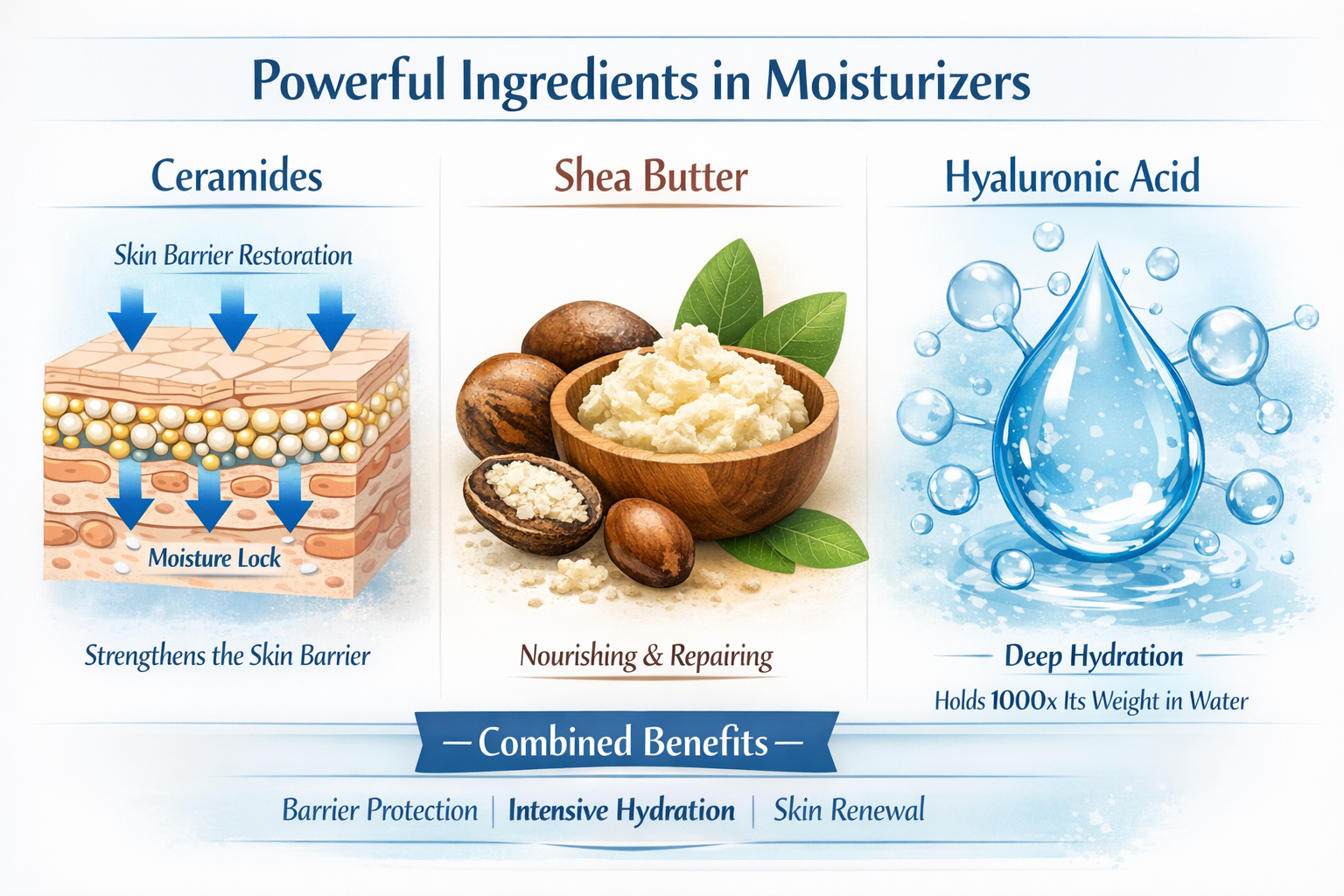
Ceramides are naturally occurring sphingolipid molecules that constitute roughly 40–50% of the intercellular lipid matrix in the stratum corneum, the outermost layer of the epidermis. They form structured lipid lamellae that limit transepidermal water loss (TEWL) and protect against irritants and microbes. Reduced ceramide levels have been linked to xerosis (dry skin), atopic dermatitis, and barrier dysfunction.
Clinical research has shown that topically applied ceramide formulations enhance barrier recovery and reduce TEWL in dry or compromised skin models. For example, reduced ceramide content correlates with increased water loss in atopic dermatitis lesions compared to normal skin.
Key Reference: Imokawa G. et al., “Decreased Level of Ceramides in Stratum Corneum …” Journal of Investigative Dermatology (1991). DOI: 10.1111/1523-1747.ep12470233 ScienceDirect
Shea Butter: Lipid Replenishment and Barrier Support
Shea butter, extracted from the nuts of Vitellaria paradoxa, is composed primarily of triglycerides rich in stearic and oleic fatty acids and includes minor components such as tocopherols and plant sterols. These components contribute to its emollient and mild anti-inflammatory properties. Shea butter’s lipid profile is compatible with the skin’s own fatty acid composition, aiding in the restoration of the lipid matrix when applied topically.
While not all cosmetic research focuses on clinical endpoints, comprehensive analyses of shea butter’s biochemical composition confirm its antioxidant and anti-inflammatory activities that can support skin health.
Key Reference: Honfo et al., “Nutritional Composition of Shea Products and Chemical Properties of Shea Butter…” Critical Reviews in Food Science and Nutrition (2014). DOI: 10.1080/10408398.2011.604142 ResearchGate
Hyaluronic Acid: Advanced Hydration and Structural Support
Hyaluronic acid (HA) is a glycosaminoglycan capable of holding up to 1,000 times its weight in water, making it one of the most potent humectants used in skincare. In human skin, HA contributes to hydration, elasticity, and resilience by attracting and retaining water within the extracellular matrix.
Topical HA has been shown in randomized controlled studies to improve skin hydration and elasticity measurably. Low-molecular-weight HA, in particular, can enhance water retention and reduce the appearance of fine lines through increased skin turgor.
Key References:
Papakonstantinou E., Roth M., Karakiulakis G., “Hyaluronic acid: A Key Molecule in Skin Aging,” Dermato-Endocrinology (2012). DOI: 10.4161/derm.21923 PubMed
Pavicic T. et al., “Efficacy of Cream-Based Novel Formulations of Hyaluronic Acid …” Journal of Drugs in Dermatology (2011); topical 0.1% HA improved hydration and elasticity. DOI (Journal ID) J Drugs Dermatol. 2011;10(9):990-1000. PubMed
Synergistic Efficacy in Moisturizer Formulations
Each ingredient delivers a distinct but complementary role:
Hyaluronic acid attracts and holds water within the epidermis, significantly increasing hydration. PubMed
Ceramides replenish deficient intercellular lipids and stabilize the barrier to prevent moisture loss. ScienceDirect
Shea butter provides a lipid-rich emollient base that both softens the skin and reinforces the barrier by providing fatty acids and antioxidant vitamins. ResearchGate
This combination mirrors the natural physiology of the skin and has been supported by scientific studies showing improved hydration, reduced TEWL, and enhanced barrier integrity with consistent use.